
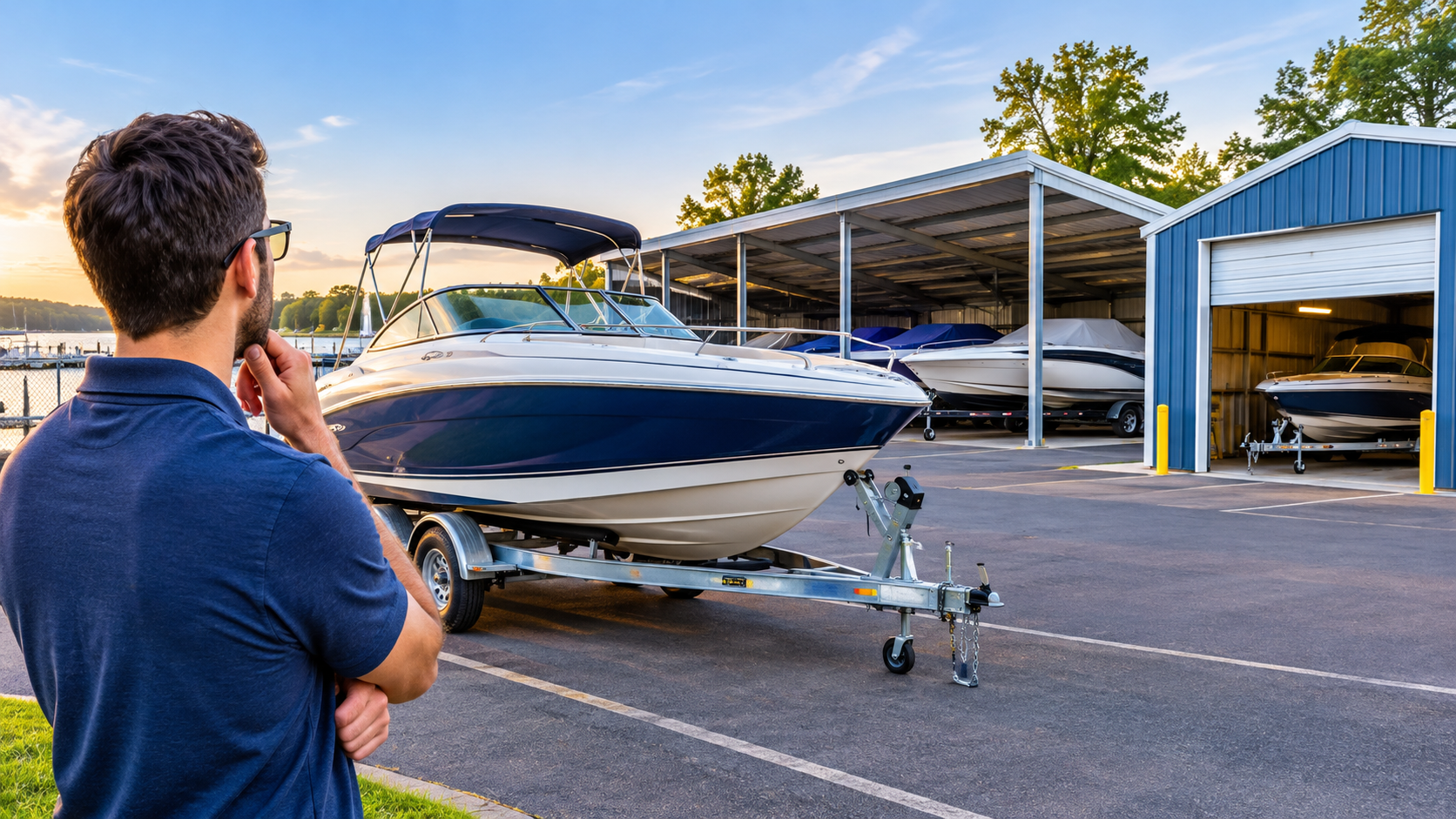
Having a boat is a fun way to fish, cruise and spend time on the water. When not in use, it can be difficult to find a suitable location to store it. Space, protection and accessibility are necessary for boats. Selecting the right boat parking spot can help you to keep your investment safe and ready for your next adventure.
There are a number of choices, such as private property, marinas, outdoor storage and covered storage. Knowing the differences can assist you in selecting the one that is suitable for your boat, budget and storage requirements.
There are a number of options for boat owners when it comes to where to park their boats. The location will vary with the size of the boat, the type of trailer, local regulations and frequency of use.
There are several common boat parking solutions:
When selecting a parking spot for your boat, consider accessibility, security, available space and monthly costs.
 How to Choose the Right Boat Storage Option
Choosing the right storage space is not just about locating a space, it also requires the ability to find the right space. The selection should meet the physical needs and longevity of the boat.
Take measurements of your boat before choosing a storage spot. Add its overall length, width, height and trailer dimensions. Be mindful that extra space might be required for manoeuvring and parking.
A space that appears adequate may not be able to fit the entire boat and trailer. Please check the size of the facility before booking.
For owners who want to protect their boat from the weather, indoor storage is a good option. It can also help minimize dust and debris exposure.
Generally, outdoor storage is more accessible and may be more cost-effective. Boats that are stored outside, however, may need protection and regular maintenance.
When choosing where to park your boat, consider your local climate and how long you’ll be storing your boat for.
Convenient access makes boat ownership easier. Consider how frequently you plan to use your vessel and whether you need access during weekends or holidays.
Look at the hours of operation, entry arrangements, driveway conditions, and space for trailers. Quick access can save time when getting ready for fishing trips, vacations or weekend outings.
 Important Space and Parking Considerations
Planning is important for boat storage. When considering a facility, review the following elements.
These factors will assist you in finding a parking spot for your boat that is not only convenient but also protected.
Yes, but it is dependent on the storage facility and the size of the unit. There are some facilities that have oversized units that are designed for boats, RVs, and other recreational vehicles.
Check the door height, interior dimensions, access and trailer compatibility of the unit before renting. Additionally, inquire about policies at the facility for fuel, batteries, maintenance, and long-term storage of vehicles.
When boats are not in use, an enclosed unit may be helpful to keep them safe from the elements.
With proper preparation , your boat can stay in good condition for long periods of time when it is not in use.
Here are some simple procedures:
When you’re thinking about where I can park my boat, you should begin by assessing the storage options in your area. Make comparisons based on space, accessibility, security features, and costs.
Owners who require an outdoor parking area for their boat and trailer might be able to use a dedicated boat trailer parking lot. When extra weather protection is needed, covered or enclosed facilities might be better.
Looking for reliable and convenient storage space? Contact All Lakes Storage today to explore suitable storage options for your boat and find a space that meets your needs .
Consider your boat's dimensions, trailer compatibility, security, accessibility, weather protection, facility rules, and monthly costs before selecting a suitable storage location.
Indoor storage offers additional protection from weather, dust, and debris, while outdoor storage provides convenient access and can be a more economical option.
Storage requirements depend on boat length, width, height, trailer dimensions, and maneuvering clearance. Always measure everything before reserving your storage space.
Yes. Proper winterization, cleaning, battery care, moisture prevention, and suitable storage conditions help protect boats during extended winter storage periods.


