
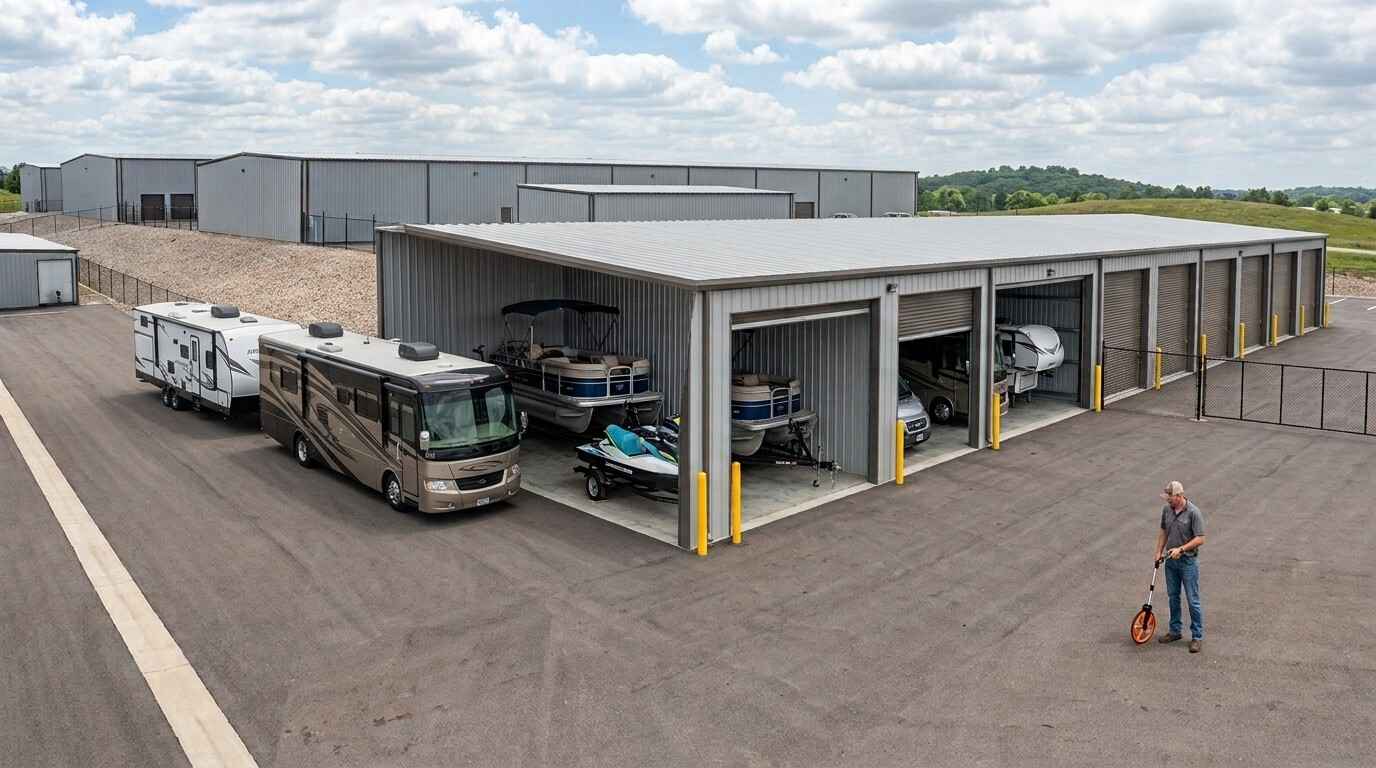
So, you are trying to back a fiberglass living room into a concrete box. A common scenario every single month: somebody scrapes a $500 rear bumper against a steel bollard because they “eyeballed” their storage unit. It’s painful. They assumed a 30-foot camper fits neatly into a 30-foot slot. It doesn’t
Recreational vehicles are awkward, bulky, and covered in fragile attachments. If you guess your dimensions, you are going to pay for it in fiberglass repairs. Sizing your unit correctly isn’t just about squeezing in. It’s about keeping your sanity intact when you drop off your rig after a grueling six-hour drive
Look at your brochure. It says your rig is exactly 28 feet in length. Lie. That’s just the box. The manufacturer didn’t measure the four-foot A-frame tongue. They ignored the heavy-duty weight distribution hitch. They completely forgot about the oversized spare tire bolted to the back bumper. Oh, and what about the roof ladder? That adds another six inches of metal jutting out, just waiting to punch a hole in a roll-up door
Because of these hidden add-ons, your rig almost never matches its paperwork. The brochure exists to sell you a dream, not a storage unit. You need a tape measure. A real one. Pull it from the absolute tip of the hitch to the furthest piece of plastic on the rear. That is your actual length. Only then do you know the true storage size you require
Here’s the reality of figuring out your space. It changes drastically based on what you are dragging behind your truck
You bought a house on wheels. A Class A motorhome is massive, unwieldy, and requires a terrifying amount of turning radius. If your rig is 40 feet long, you absolutely cannot rent a 40-foot unit. You need 50 feet. Minimum. Think about the swing of the tail when you cut the wheel inside cramped RV storage facilities. You need that extra margin just to maneuver without trading paint with the guy’s vintage Airstream next door. You want room to pull forward, adjust, and back in straight
Fifth wheels and travel trailers are the tricky ones. They sit right in that frustrating middle ground. You might have a compact teardrop hitting 25 feet, or a sprawling bunkhouse pushing 35 feet. Remember the pin box on a fifth wheel. It hangs forward awkwardly. If you back it tightly to the wall, that pin box is going to dictate how far forward your bumper sits. Don’t let it keep your bay door from closing
Boat guys are the absolute worst offenders here. You think you need a 20-foot spot for a 20-foot center console. Wrong. You forgot the “trailer tax.” The trailer tongue adds three feet to the front. The outboard motor, tilted up for transport, adds another three feet to the rear. Suddenly, your 20-foot boat demands at least 26 feet of space just to squeeze into standard RV and boat storage

Stop guessing. Use this breakdown when evaluating storage options . It’s not perfect, but it’s a massive upgrade from trusting a slick RV salesman.

But there’s a catch. Where you park heavily dictates how much wiggle room you actually need. Outdoor RV storage offers forgiveness. A lot of it. You back into a massive gravel or paved spot, and if your hitch overhangs the dirt a little, nobody really cares. You also have endless vertical clearance
Enclosed storage solutions? That’s a rigid, unforgiving bunker. If you are off by two inches, the metal door does not close. Period. For long term storage in an enclosed unit, you have to aggressively factor in ceiling height, too. Don’t rip off your $1,200 rooftop A/C unit because the roll-up door has an unexpectedly low header. Measure the total height from the pavement to the very top of your highest roof vent. Do it twice
Worse still, people forget they actually have to get out of the vehicle. What good is finding a highly secure storage facility if you have to crawl out of a passenger window? You need a walk-around room. Let’s say your rig is 8.5 feet wide. If you rent a space exactly 10 feet wide, you have a mere 9 inches on either side. Try opening a heavy truck door in 9 inches of space. You can’t
Most RV owners need spaces at least 12 feet wide just to step out without denting their door on a concrete block wall. You want to be able to open your basement storage compartments or check your tire pressure. You are paying for usable storage spaces, not a straitjacket. Squeezing in is one thing, but operating around the vehicle requires legitimate feet of space
Get off the couch, grab a 50-foot tape measure, and get the actual, messy, real-world numbers on your rig today. Once you know exactly what you are dealing with, stop settling for cramped dirt lots and book a space that actually fits. Secure your ideal, properly sized unit right now at All Lakes Storage before the season hits and you are stuck parking that expensive machine in your driveway.
Yes, but barely. It leaves less than a foot on each side. Upgrade to 12 feet wide if you want to open doors comfortably.
No. Outdoor spots often allow a slight tongue overhang, making them much more forgiving than the rigid walls of indoor units.
Yes. A 40-foot unit provides a safe 5-foot buffer for your hitch, rear bumper, and comfortable walk-around access.
Most facilities will force you to upgrade sizes. Fire codes mandate clear driving lanes, so keeping your rig completely inside the lines is mandatory.


