
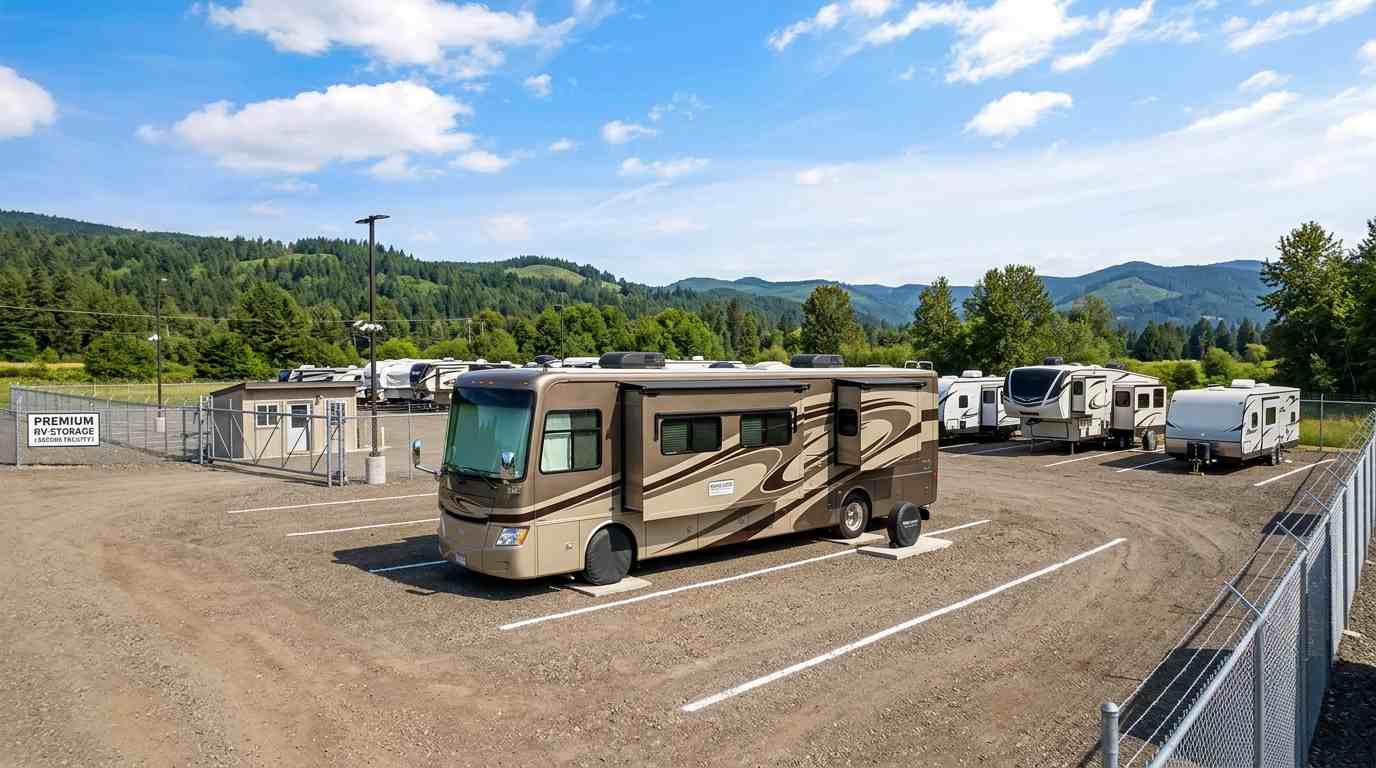
Parking outside will not automatically void your RV warranty. However, the neglect that often happens during outdoor storage will destroy your claims. Warranties demand strict, routine upkeep. If you ignore seals, roofs, and winterization while your camper sits outdoors, your provider will reject your repair bills.
Leaving your rig out in the elements exposes it to brutal conditions. Sun, freezing rain, and heavy winds constantly attack the exterior of your camper. You might assume your massive investment comes with a bulletproof guarantee. Well, it does not. Warranties contain very specific language about owner responsibilities. When you park your vehicle for the off-season, the clock on your required maintenance does not stop ticking.
No, keeping your vehicle outdoors does not directly cancel your factory coverage. Manufacturers understand that most owners do not have massive climate-controlled garages. They build these vehicles to survive the outdoors. The problem arises from a common legal loophole called the owner maintenance clause.
Your warranty is a contract that covers defects in materials and factory workmanship. It promises that the factory assembled the vehicle correctly using functional parts. It does not promise that the vehicle will withstand the test of time without your help.
When you store your camper outside for six months, things start to shift. Caulking dries out. Sun bakes the fiberglass. If a defective part breaks, the warranty covers it. If a part breaks because it sat neglected in a snowbank for a year, the provider points to the maintenance clause. They will classify the failure as owner negligence. Negligence gives them immediate grounds to deny your claim and leave you holding the bill.
Environmental damage falls entirely outside the scope of factory and extended warranties. Your coverage provider draws a hard line between a structural failure and natural wear and tear. You must understand this distinction before you walk away from your camper for the winter.
Sunlight degrades exterior components rapidly, and manufacturers reject claims for this fading. UV rays are the silent killers of an RV exterior. They bake the fiberglass siding, causing chalking and heavy oxidation. Decals will peel, shrink, and crack under constant sun exposure.
If you want to keep your exterior looking new, you need to apply UV-blocking waxes and sealants before parking the rig. The responsibility for cosmetic preservation falls entirely on your shoulders.
Providers will flatly deny your leak claim if your roof seals show signs of neglect. This is the single most common reason warranty companies reject expensive repair bills. Water damage destroys campers from the inside out. Soft floors, rotting walls, and moldy insulation cost thousands of dollars to fix.
Your roof relies on specialized lap sealant to keep water out of the vents, skylights, and seams. When a camper sits outside in fluctuating temperatures, this sealant expands and contracts. Eventually, it cracks. If rain sneaks through a cracked seal and destroys your ceiling, the warranty company will demand proof of your maintenance history. If you cannot prove that you inspected and touched up the roof sealant, get ready to be blamed for the leak.
You must treat your parked camper with the same attention you give a driven one. Preventive care is your strongest defense against a rejected claim. You need to create a verifiable paper trail showing you took excellent care of the vehicle while it sat outside.
Keep a detailed logbook in your glove compartment. Write down the dates you inspected the roof, conditioned the slide-out seals, and checked the tire pressure. Keep every single receipt for tubes of caulking, roof washes, and winterizing antifreeze. If a warranty inspector tries to deny a claim based on negligence, hand them your binder of receipts and your maintenance log.
A breathable cover helps prevent environmental damage without causing warranty-voiding moisture issues. Buying a high-quality, custom-fit cover is an excellent way to shield your investment from UV rays and snow buildup. However, you must avoid cheap, waterproof tarps at all costs.
Plastic tarps do not breathe. They trap condensation against the siding of your camper. This trapped moisture breeds mold and forces moisture into the fiberglass seams. The resulting damage is called delamination, where the outer fiberglass wall separates from the wooden frame. Warranty inspectors can easily spot delamination caused by trapped moisture under a tarp. They will deny the repair claim instantly.

Manufacturers mandate documented check-ups of the roof, plumbing, and structural components. You must read your specific owner’s manual to find the required maintenance intervals.
Most brands require a thorough roof inspection every 90 days. You need to climb a ladder, check every inch of caulking, and look for tiny hairline cracks. You must also inspect your window weeping holes to ensure they are free of debris. If you park near trees, pine needles and leaves will clog these drainage holes. A clogged weep hole forces rainwater inside the walls.
Warranties cover factory defects, while insurance policies cover sudden external accidents. Many owners confuse the two and assume they have blanket protection.
If a dead tree branch falls on your parked camper and smashes the air conditioning unit, your warranty will not help you. You must file a claim with your comprehensive RV insurance. If a freak hailstorm shatters your skylight, you call your insurance agent. You only call your warranty provider if the air conditioner motor burns out on its own due to a faulty wire.
Protecting your significant investment requires more than just parking it in a driveway and hoping for the best. A dedicated, secure environment takes the guesswork out of preserving your vehicle’s condition and satisfying strict coverage requirements.
Proper facilities provide the space and accessibility you need to perform those vital 90-day seal inspections without hassle. Secure a spot at All Lakes Storage today to ensure your camper stays in pristine, claim-ready condition all year long.
Tarps trap severe moisture against the exterior of your rig. This causes fiberglass delamination and mold growth, which manufacturers will refuse to cover under standard warranties.
Yes, draining your plumbing lines prevents burst pipes during winter. If you skip this critical step, warranty companies classify the resulting damage as owner negligence immediately.
Installing permanent aftermarket storage boxes or custom framing can void specific structural warranties. Always check with your manufacturer before drilling any holes into the vehicle frame.
The exact duration does not matter to warranty providers. They only care whether you perform routine maintenance and inspections while the vehicle remains parked outdoors continuously.


