
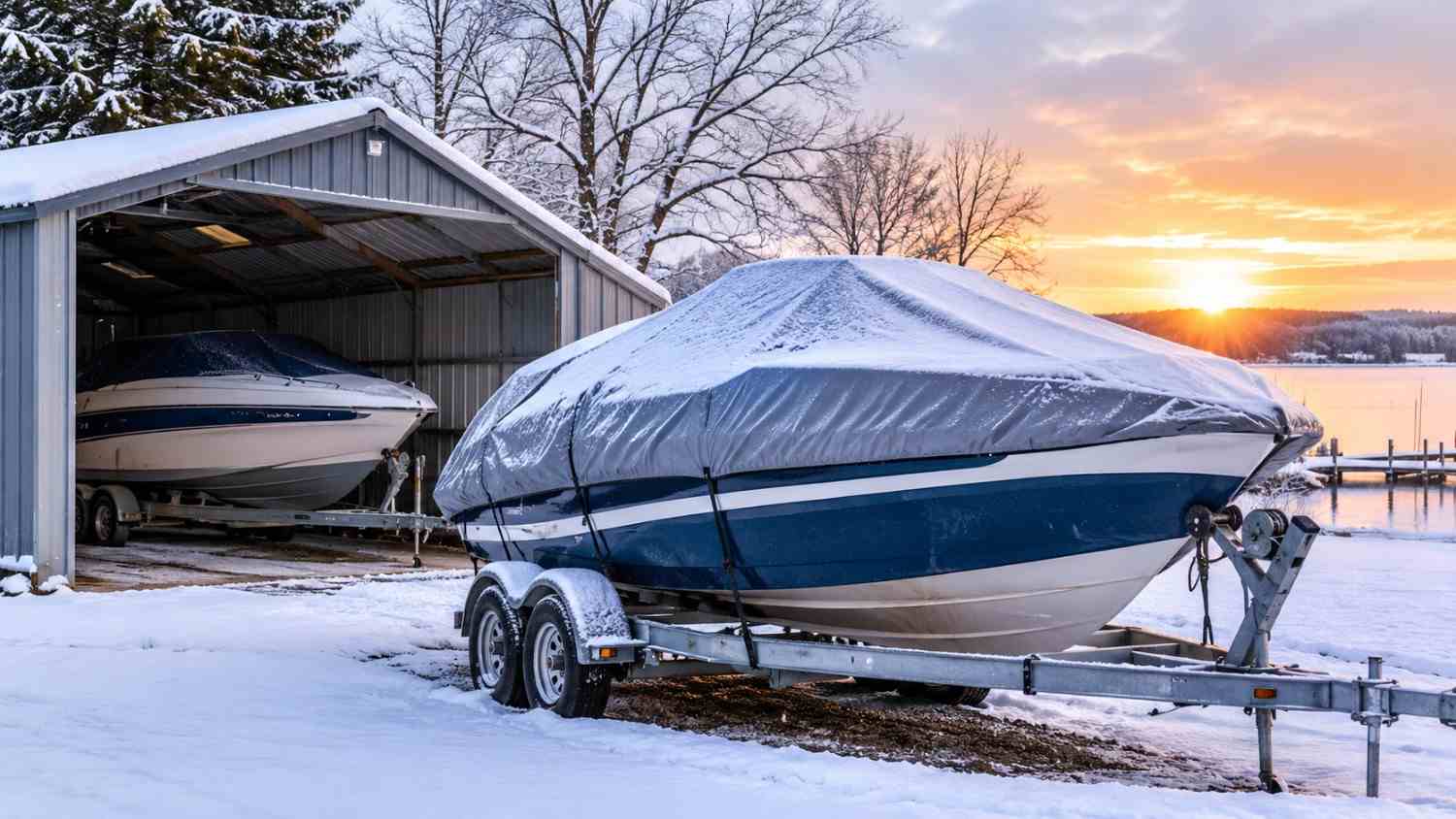
Winter brings colder temperatures, snow, ice, and changing weather conditions that can affect boats left unused for extended periods. The right storage can make all the difference in not only protecting your vessel, but also in avoiding costly repairs. Many boat owners consider storing boat outside in winter because outdoor spaces are convenient and often more affordable than indoor facilities. But outdoor storage needs to be done properly and protected.
If you own a fishing boat, pontoon, speedboat, or recreational boat, knowing what winter storage risks can impact the boat can help keep it in good condition. There are a number of considerations to keep in mind before selecting a storage spot, including moisture, freezing temperatures and more.
 Understanding the Risks of Storing a Boat Outside in Winter
The risks of storing a boat outside during the winter months are well known. The dangers of wintering a boat outside are familiar.
Boats stored outdoors are subjected to weather elements which can take their toll on the boat’s structure and components over time. Outdoor storage may be convenient, but the owner should be aware of the possible problems.
Heavy snowfall can collect on boat covers and create additional weight. Snow can stretch, sag or cause damage if the cover is not supported.
Ice can also encase exposed parts and present further maintenance issues. When storing boat outside in winter, regularly inspect the cover and remove accumulated snow carefully.
Moisture can enter various parts of a boat through rain, melting snow and condensation. Upholstery, flooring, electrical components and other interior materials can be damaged by standing water.
The problem can be aggravated by poor ventilation, which can cause moisture to build up in the house. Avoid condensation by using the proper covers and ventilation.
Onboard plumbing, cooling systems, batteries and other parts can be impacted by cold temperatures. If water is left in some systems, it could freeze and expand, leading to cracks or expensive damage.
It is important to winterize a vessel properly before it is left outside for several months.
Boat covers, upholstery and exterior finishes can be slowly impacted by the sun even in the winter months. Wind can also blow off protective materials, leaving exposed areas.
When storing a boat outside in winter, select durable, weather-resistant covers designed for your vessel.
If owners take the proper precautions, outdoor storage can be effective. Winter preparation of your vessel can minimize exposure issues.
Start by washing the exterior and cleaning the interior. Clean away dirt, salt, algae and other surface-damaging materials that can accumulate over time.
Dry the boat thoroughly before covering. Clear away food, personal items and unnecessary items that may lure pests or create odors.
Follow the manufacturer’s winterization recommendations for your boat. Preparation can include draining water systems, using proper antifreeze, fuel stabilizer and protecting the engine depending on the vessel.
If you are not sure of any maintenance procedure, consult a qualified marine professional.
A well-fitting cover offers a valuable defense against snow, rain, dirt and debris. Select a sturdy, weatherproof cover that fits your boat’s size.
Ensure that the cover is fastened correctly. Good drainage and snow clearance can prevent water and snow build-up in low areas.
Batteries can be impacted by cold weather. Disconnect, charge or remove the battery as recommended by the manufacturer during the winter months.
Remove batteries and keep them in a suitable place and check them regularly.
Before storing, check tires, brakes, lights and other parts of your boat that are left on a trailer. Make sure the trailer is on a firm, flat surface.
These preparations make storing the boat outside in winter more manageable and help reduce avoidable maintenance problems.
Both choices have their pros and cons, depending on your budget, space, and protection needs.
A suitable location makes storing a boat outside in winter easier while providing a practical arrangement for long-term storage.
 Choosing the Right Winter Storage Location
The preparation is as important as the storage. Check if there is adequate space, ground conditions, and access.
Take into account the following:
A good location for winter storage of a boat is one that is easy to access and offers a practical arrangement for long-term storage.
Understanding how to store a boat for winter will help avoid common issues in winter. When preparing to depart with your vessel, do the following:
By following this checklist, you can make seasonal storage easier and get your boat ready for the next boating season.
Need reliable boat storage? Call All Lakes Storage today to discuss convenient storage options and determine where to store your boat for the winter season.
Yes, a properly fitted, weather-resistant cover protects your boat against snow, rain, dirt, debris, and moisture while reducing exposure to harsh environmental conditions.
Yes, freezing water inside engines, plumbing, and other systems can expand and cause cracks. Proper winterization helps prevent expensive cold-weather damage.
Inspect your boat periodically throughout winter. Check its cover, accumulated snow, moisture, trailer condition, and signs of damage after severe weather conditions.
Indoor storage generally provides greater protection against harsh weather, snow, wind, and debris. However, properly prepared outdoor storage can also be a practical alternative.


